
About me
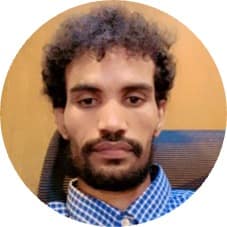
Tesfahiwet Yemane
Tesfahiwet Yemane | DPhil Candidate in Geophysics, Department of Earth Sciences, University of Oxford.
Pursuing a Doctor of Philosophy in Geophysics at the University of Oxford under the expert guidance of Mike Kendall and Jon Blundy, I am dedicated to leveraging the power of Machine Learning and Deep Learning in Geophysics. Our research focuses on detecting geothermal brines, a potential source of renewable energy, and vital reservoirs of critical metals such as Lithium, using seismic methods.

Our planet is grappling with the dire consequences of climate change. Rising global temperatures, extreme weather events, and environmental degradation pose severe threats to our future. In response to this crisis, our work aims to address the climate change challenge head-on.
By harnessing seismic and magnetotelluric methods, our research strives to identify geothermal brines that not only offer sustainable energy solutions but also house essential metals like Lithium. This multifaceted approach directly contributes to mitigating climate change by reducing greenhouse gas emissions through geothermal energy production, while simultaneously facilitating the transition to clean energy solutions and supporting the burgeoning demand for critical minerals essential for batteries and renewable technologies.

Seismic studies rely on the way waves move through the Earth, a process known as wave propagation. When energy from seismic events or natural vibrations travels through the ground, the waves can speed up, slow down, scatter, or lose strength depending on the rocks and materials they pass through. By measuring these changes, we can uncover what lies beneath the surface. For example, seismic attenuation examines how waves weaken due to scattering and absorption, revealing details about rock composition and fluid content. Seismic tomography, much like a CT scan, uses waves from many sources to create 3D images of the Earth’s interior, while ambient noise tomography makes use of everyday background vibrations to study the subsurface even without seismic events. Together, these methods and others provide powerful tools for imaging geothermal systems.

Environmental Protection
“Protecting the environment is not a choice, but our collective responsibility for a sustainable future.”
Innovation and Creativity
“Innovation and creativity are the driving forces that push the boundaries of science and bring about new solutions to the world’s challenges.”
Collaboration
“Collaboration is the key to success – bringing diverse perspectives and expertise together to achieve common goals.”